
October 22, 2026
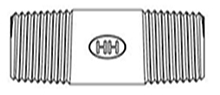
A brass pipe nipple is a short length of brass pipe or barstock with male threads, used to extend or connect low-pressure lines in plumbing, instrumentation, and utility service. Brass — a copper-zinc alloy — is easy to machine and thread, resists corrosion in many water and atmospheric environments, and has been a standard plumbing material for decades. For buyers, the appeal is a connector that is inexpensive to produce in volume, seals well with standard NPT threads, and performs dependably in the moderate duties where it is specified.

Several properties make brass a practical fitting material:
The zinc content is the key variable. Higher zinc improves strength and machinability but increases the risk of dezincification — a form of corrosion where zinc is selectively leached, leaving a porous copper structure. This is why dezincification-resistant (DZR) or "low-zinc" brass grades are specified for aggressive water service.
Brass pipe and nipples are covered by standards such as ASTM B43 (seamless red brass pipe) and ASTM B687 (brass, naval, and bronze pipe nipples). Red brass (a lower-zinc copper alloy) is preferred where dezincification resistance is needed. Threads follow ASME B1.20.1 (NPT). A buyer should state the brass type — for example, red brass per ASTM B43, or a DZR alloy — rather than simply "brass," because the alloy choice determines both corrosion behavior and compliance with plumbing codes that restrict lead and zinc content.
A brass nipple fitting is appropriate in several moderate-duty environments:
The constraints on brass are as important as its advantages:
Brass nipples use the same NPT threads (ASME B1.20.1) as steel and stainless, so they mate directly with those systems. Care is needed at dissimilar-metal junctions: brass is cathodic to aluminum (brass will survive, aluminum will corrode) and anodic to stainless in some environments. In potable water, brass is commonly connected to copper or PVC; the compatibility is generally good, but dielectric isolation is worth considering where stray-current or aggressive water is involved.
Modern plumbing brass is produced to lead-free requirements in many markets (for example, the U.S. "lead-free" definition limits the wetted-surface lead content). When a brass pipe nipple is used for potable water, the alloy must meet the applicable lead-free standard, and the supplier should provide documentation. This is a compliance point that should be confirmed rather than assumed.
Order with: nominal size, wall or type, length and thread length, end type, brass grade (red brass ASTM B43, DZR, etc.), standard (ASTM B687 / B43), and any lead-free or potable-water certification requirement. State the medium, temperature, and pressure so the supplier can confirm brass is suitable and select the alloy. For a wider selection of nipples in steel, stainless, and other alloys, see the catalog at our pipe nipple catalog.
Yes, but the alloy must meet the applicable lead-free requirement for the jurisdiction, and for aggressive water a dezincification-resistant or red-brass grade is recommended. Confirm the certification with the supplier before specifying for drinking water.
Standard high-zinc brass can fail by dezincification in aggressive or brackish water, leaving a weak porous structure. Red brass (lower zinc) and DZR brass resist this failure mode and are the safer choice wherever water chemistry is uncertain.
Generally no. Brass loses strength at elevated temperature and is not appropriate for high-pressure process lines or steam. Use steel or stainless for those duties. Brass is a low-pressure, moderate-temperature material.
Brass is vulnerable to ammonia and amines (ruling it out of ammonia refrigeration), strong acids, and oxidizing chemicals. It performs well in neutral or mildly alkaline water and many atmospheric environments but should be checked against the specific medium.
Yes. Brass uses NPT threads per ASME B1.20.1 and mates directly with steel or stainless NPT fittings. Watch for galvanic effects at the junction and consider dielectric isolation where a conductive, wet path could cause corrosion of the less-noble metal.
A brass pipe nipple is a practical, economical connector for low-pressure water, air, and instrument service where its machinability, thread seal, and moderate corrosion resistance are exactly what the duty needs. The decisions that matter are alloy selection (red brass or DZR for aggressive water, standard brass for benign service), confirmation of lead-free compliance for potable use, and avoidance of the environments where brass fails — high temperature and pressure, ammonia, and aggressive chemicals. Specified within those boundaries and built to ASTM B43 or B687 with ASME B1.20.1 threads, a brass nipple delivers a reliable, low-cost connection; specified outside them, it is the wrong material for the job.


