
October 16, 2026
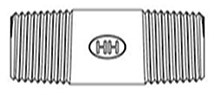
A carbon steel pipe nipple is one of the most frequently specified components in process and utility piping, yet it is often overlooked in procurement planning. In simple terms, it is a short length of pipe with male threads on one or both ends, used to extend a line, join two fittings, or adapt threading at a connection point. Most plants, skids, and equipment packages rely on dozens of these small parts to make final tie-ins work. From a supplier's view, getting the material, schedule, and thread form right is what separates a fitting that holds pressure for decades from one that leaks at start-up.
This guide is written for buyers, plant engineers, and procurement teams who need to specify carbon steel pipe nipples with confidence rather than ordering by habit.

The defining feature is length. A pipe nipple is generally considered anything shorter than a standard pipe length—most commonly from half an inch up to about 12 inches. Below roughly two inches it is often called a "close" or "short" nipple; longer versions are "long" nipples. The two end configurations matter: a threaded pipe nipple with male National Pipe Taper (NPT) threads on both ends is a double-ended nipple, while a "pipe-to-plain" or "threaded one end" version serves transitions into welded systems.
Not all carbon steel pipe nipples are made the same way, and the manufacturing route affects strength. Barstock nipples are machined from solid round bar, giving a uniform, fully traceable body with no weld seam. They are preferred where the schedule of the nipple must exceed what standard pipe wall thickness offers, or where a weld-free body is required for inspection. Pipe nipples are cut from standard carbon steel pipe and then threaded, which is more economical at high volume. A competent manufacturer will tell you which route fits the service rather than defaulting to the cheaper option.
The schedule defines wall thickness and therefore pressure rating. Common choices for industrial pipe nipples are Schedule 40 and Schedule 80, with Schedule 160 and XXS available for severe service. A Sch 40 pipe nipple suits most utility and low-pressure applications, while Sch 80 pipe nipples are specified where higher pressure or mechanical abuse is expected. When a nipple sits at a pump discharge or a steam trap station, the thicker wall is usually worth the modest cost increase.
Carbon steel grades most often used include ASTM A106 Grade B for seamless pipe and ASTM A53 for welded or seamless. The finished carbon steel pipe nipple is typically produced to ASTM A733, which covers welded and seamless carbon and alloy steel nipples, and threads are cut to ASME B1.20.1 (NPT). When a project references these standards, the supplier should provide mill test reports and thread-gauge verification. We have seen too many field failures traced to nipples supplied against a generic "carbon steel" description with no grade stated.
Plain black (uncoated) carbon steel pipe nipples are standard for indoor utility service. For corrosion resistance, hot-dip galvanizing per ASTM A153 is common, though it should be avoided above roughly 200°C where zinc can flake. Some factories also offer zinc-plated or painted finishes for specific environments. For potable or instrument air lines, confirming the coating is compatible with the medium is part of good specification practice.
In practice, carbon steel pipe nipples appear almost everywhere a threaded connection is needed:
Because they are cheap and standard, it is easy to under-specify them. In our supply experience, the cost of a quality nipple is trivial next to the labor of cutting a line open to replace a leaking one.
When issuing a purchase order, the minimum information a manufacturer needs is: nominal pipe size, schedule, length (overall and thread length), end type (both threaded, plain one end, beveled for weld), material grade, coating, and applicable standard. Adding the service temperature and pressure lets the supplier flag conflicts—such as a thin-wall nipple proposed for a high-pressure duty.
Anything shorter than a standard pipe length, typically up to about 12 inches, is treated as a pipe nipple. Very short "close" nipples under two inches are often made by threading both ends of a short pipe section or by machining from barstock when the length is too short to thread conventionally.
In most utility services, a Sch 40 pipe nipple is adequate. Where the nipple sees cycling pressure, mechanical impact, or sits in a critical connection, Sch 80 pipe nipples add margin at a small price premium and reduce the chance of a mid-life failure.
Yes, but the finish matters. A galvanized carbon steel pipe nipple is typical for potable systems, while bare black steel is generally avoided for drinking water because of corrosion and taste concerns. Always confirm the coating meets local potable-water requirements.
NPT per ASME B1.20.1 is the default for North American carbon steel pipe nipples. Other regions may use BSPT. Mixing NPT and BSPT threads causes leaks, so the thread form must match the mating fitting.
Check nominal size, schedule, length, and end type against the order. Verify threads with a thread gauge and look for cracks, out-of-round ends, or coating damage. A reliable supplier will provide material certs and, on request, thread-gauge reports.
A carbon steel pipe nipple is a small part with an outsized role in system reliability. Specifying the correct grade, schedule, length, and end finish—and buying from a manufacturer that stands behind material certification—prevents the majority of threaded-connection failures we encounter in the field. Treat nipples as engineered components, not commodities, and your piping tie-ins will stay tight for the life of the plant.


