
October 16, 2026
A KC nipple—short for "King Combination nipple"—is a simple but highly practical hose-end fitting. One end is a plain hose shank (sometimes called a stem) that clamps into a rubber or PVC hose; the other end carries male NPT threads that screw directly into a pipe, valve, or camlock adapter. In our supply to tank terminals, oilfield crews, and process factories, the KC nipple is the go-to part for building a suction or discharge assembly without welding or flanging on site.
This article explains what the KC nipple is made of, where it is used, and why it remains a staple of industrial hose connections.
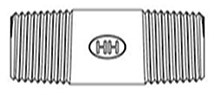
The defining shape is the combination: a smooth, often serrated or plain cylindrical shank on one side and a tapered NPT thread on the other. The serrations, when present, help the hose clamp grip and resist pull-out under suction. A KC nipple with nut adds a hex or wing nut on the threaded end so it can be tightened by hand or wrench into a coupling. Because the part bridges two different connection styles, it removes the need for a separate adapter in many assemblies.

KC nipples are produced in several materials to match the fluid and environment:
A manufacturer should confirm the material and any plating, since the wrong choice shortens service life in aggressive service. For potable or food lines, stainless or a certified material is the safe specification.
On the hose side, the shank is inserted into the hose bore and secured with one or two hose clamps (or bands). On the thread side, the male NPT screws into a female threaded port, valve, or into a female camlock adapter that then locks to a camlock coupling. This flexibility is exactly why the combination nipple is so common: one part serves suction hose, discharge hose, and tank-truck loading arms with only a change of clamps and mating fittings.
The KC nipple appears wherever flexible hose meets rigid piping:
Because the hose nipple can be clamped in the field with basic tools, crews can build or repair a line without a fabrication shop.
Several practical reasons explain the KC nipple's staying power:
For a maintenance lead, a bin of KC nipples in assorted sizes is insurance against downtime when a transfer line fails.
When ordering from a supplier, match the shank to the hose internal diameter and the thread to the mating port. State the material, whether you need a nut, and the pressure and temperature of the duty. If the assembly sees suction (negative pressure), choose a shank with grip serrations and use two clamps to prevent collapse or pull-out. A factory that asks these questions is one worth keeping.
No, but they work together. A KC nipple provides the hose-to-NPT transition; a camlock adapter with female threads receives the nipple's male NPT and then locks to a male camlock coupling. The KC nipple is the stem; camlock is the quick-connect system it can feed into.
Yes. A serrated hose shank nipple clamped with two bands handles suction well, provided the hose is rated for vacuum. For high suction, verify the shank grip and hose wall stiffness with your supplier.
For aggressive or food-grade fluids, stainless steel KC nipples (316 for the toughest duty) are typical. Carbon steel suits oil, water, and air. Brass works for lower-pressure, non-corrosive service and where sparking is a concern.
The shank is pushed into the hose and held with worm-gear or T-bolt clamps. A KC nipple with nut lets you tighten the threaded end without spinning the hose. Two clamps are recommended on suction or high-vibration lines.
The nipple body is generally robust, but the real limit is the hose and clamp assembly, not the combination nipple itself. Rate the system to the hose's working pressure and use clamps sized for that pressure.
The KC nipple earns its place through pure practicality: it joins hose to pipe or camlock in minutes using clamps and a wrench. Specified in the right material and size, and sourced from a manufacturer that documents the alloy and finish, it keeps transfer lines running with minimal downtime. For any operation that moves fluid through flexible hose, a stock of KC nipples is among the cheapest insurance a plant can buy.


