
October 22, 2026
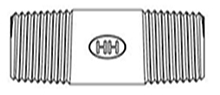
A stainless steel pipe nipple is a short length of stainless pipe with male threads, a plain end, or a weld end, used to extend a line or make a connection in a system where carbon steel would corrode. The stainless body is the entire point: it brings the corrosion resistance of the alloy to the threaded or coupled connection, which is otherwise a common failure point in mixed-metal systems. In plants we have inspected, the nipple and its threads are frequently the first place a carbon steel run shows rust, which is exactly why specifying stainless at the connection pays off.

Carbon steel nipples perform well in dry, indoor utility service, but they fail quickly in the presence of moisture, chlorides, acids, or cleaning chemicals. A corrosion resistant pipe nipple made from stainless delays or prevents that failure. The benefit is not only avoiding leaks; it is also avoiding contamination. In food, beverage, and pharmaceutical lines, iron contamination from corroding carbon steel is a quality and compliance issue, not just a maintenance one. Stainless keeps the process stream clean and the connection intact.
The two grades that cover the large majority of stainless steel nipple requirements are:
The "L" (low carbon) variants are often specified where welding is involved, because they reduce the risk of intergranular corrosion at the weld. For a 316 stainless nipple in a coastal or chemical environment, the small premium over 304 is usually justified by the extended service life.
The pipe used to make the nipple follows ASTM A312 (seamless and welded austenitic stainless steel pipe). The nipple product form is covered by ASTM A733, which specifies dimensions and tolerances for welded and seamless carbon and alloy steel nipples — and is routinely applied to stainless nipples made to equivalent dimensional requirements. Threads are cut to ASME B1.20.1 (NPT). A supplier should be able to state the pipe specification and grade and provide material test reports on request. For sanitary applications, additional surface and finish requirements may apply beyond the general nipple standards.
Surface condition affects both corrosion resistance and cleanability:
A sanitary pipe nipple for hygienic service is usually specified with a polished interior and exterior and with end forms that match the sanitary coupling system in use (such as tri-clamp or SMS), rather than NPT, because threaded joints are harder to clean and can harbor residue.
A stainless steel pipe nipple is specified across environments where corrosion or contamination must be controlled:
As with other nipples, the buyer must state nominal pipe size, schedule, length, end type (both threaded, one plain, beveled for weld), grade, and applicable standard. Stainless is available in Schedules 5S, 10S, 40S, and 80S for pipe sizes, with 40S being the common general-purpose wall. The lower "S" schedules reflect stainless piping practice, where the corrosion allowance is built into the alloy rather than a thick wall. For threaded stainless nipples, note that cutting NPT threads removes material at the end; the schedule should be chosen so the threaded region still meets the pressure requirement.
Stainless is noble relative to carbon steel, so when a stainless steel nipple is joined to carbon steel pipe in a conductive, wet environment, the carbon steel becomes the anode and corrodes faster. This galvanic effect is manageable with dielectric isolation or by keeping the wet, conductive path interrupted, but it should be designed for rather than discovered in service. Thread sealants should be compatible with stainless; some containing chlorides can contribute to pitting if misapplied.
When ordering, provide: nominal size, schedule, length and thread length, end type, grade (304/304L/316/316L), finish (pickled, passivated, polished), standard (ASTM A312 pipe + ASTM A733 nipple), and any sanitary or cleanliness requirement. Stating the medium, temperature, and pressure lets the supplier confirm grade and wall selection. For the full stainless and alloy range, see the catalog at our pipe nipple catalog.
Use 304 / 304L for general atmospheric, indoor, and many food-service duties. Use 316 / 316L where chlorides, seawater, brackish water, or aggressive chemicals are present, because the molybdenum improves pitting resistance. The cost gap is modest relative to the service life gained in corrosive environments.
Passivation is recommended — and often required — where the service is aggressive or where weld heat-affected zones exist, because it restores the protective chromium oxide layer. For mildly corrosive, indoor use, a pickled-and-passivated finish is still good practice even if not strictly required.
Yes, but with galvanic corrosion in mind. In a wet, conductive environment the carbon steel will corrode preferentially. Use dielectric isolation or design the junction so the wet path is interrupted. The stainless component itself will generally be fine; the carbon steel is the one at risk.
Yes. Stainless is widely used for potable water, including in chlorinated municipal supplies, because it resists corrosion and does not leach harmful substances. Confirm the grade and any local plumbing-code requirement for the specific installation.
Schedule 40S is the common general-purpose choice. Because threading removes wall at the end, verify that the threaded section still meets the pressure requirement for the duty; for higher pressure, 80S provides more margin. The pipe specification (ASTM A312) and the operating conditions determine the allowable pressure.
A stainless steel pipe nipple is the correct specification whenever the environment would corrode carbon steel or whenever process cleanliness matters. The central decisions are grade (304/304L for general duty, 316/316L for chlorides and marine), surface condition (pickled/passivated or polished for sanitary use), and schedule matched to the threaded or welded end and the operating pressure. Built to ASTM A312 pipe with ASME B1.20.1 threads and confirmed material certification, a stainless nipple delivers a corrosion-resistant connection that protects both the line and the product flowing through it.


